
Overview of Order of Operations with Exponents Worksheets
Historical Context of PEMDAS and Exponents
The origins of PEMDAS trace back to the 1500s when exponents were formalized. Early used brackets and powers to clarify calculations. These conventions evolved into the order‑of‑operations rule, ensuring exact very results across disciplines.
Early Use of Exponents in the 1500s
During the 16th century, mathematicians began formalizing exponentiation as a concise notation for repeated multiplication. The symbol “^” was introduced by mathematicians such as Luca Pacioli, who published works that used exponents to simplify calculations in commerce and astronomy. In 1494, the Italian mathematician Niccolò Fontana Tartaglia published “De Solutis Problematis” where he used exponent notation to solve cubic equations, marking one of the earliest systematic uses. The notation helped streamline the computation of powers, which were essential for solving problems involving areas, volumes, and financial interest calculations. By the 1520s, French mathematician François Viète further refined exponent rules, establishing the laws of exponents that remain standard today. These early developments laid the groundwork for the modern order‑of‑operations rules, ensuring clarity and consistency in mathematical expressions across disciplines. These foundational works influenced later mathematicians, leading to the formalization of exponent rules that are integral to algebraic manipulation. The clarity provided by exponent notation helped educators teach complex concepts more effectively, setting the stage for modern curricula that emphasize the importance of order in mathematical operations. These principles are now embedded in digital calculators and programming languages, ensuring that algorithms perform calculations accurately and consistently across platforms. It works. These early conventions continue to influence modern educational standards, ensuring students grasp the hierarchy of operations from elementary to advanced algebra. It encourages!!!!
Availability of Free PDF Worksheets
Students can download unlimited, free PDF worksheets covering addition, subtraction, multiplication, division, exponents, and parentheses for grades 2‑9. These PDFs are ready for printing, printable, and include step‑by‑step solutions to reinforce learning. Use these for practice and mastery of operations now.
Download Sources and Formats
Another reliable source is K12.com, where educators can find downloadable PDF in a searchable database. For those who prefer a more interactive experience, the Education.com platform provides printable PDF and an online worksheet builder that allows real‑time customization of difficulty and content. All PDF are free to download, with no registration required, and the HTML files are fully editable, making them ideal for teachers who wish to tailor the problems to their curriculum.
Whether you need a quick set of practice problems or a full curriculum‑aligned resource, these download sources provide a flexible, no‑cost solution for students and teachers alike. They are especially useful in remote or hybrid learning environments where instant access to printable materials is essential.
Adjusting Difficulty and Content
Teachers can also embed interactive quizzes, track progress, and export data for assessment reports. Platform’s API allows integration with LMS like Canvas or Google Classroom. Custom branding options let schools add logos and color schemes. Learners receive instant feedback, teachers can adjust next steps based on analytics. This holistic approach supports differentiated learning paths!!!

Worksheet Structure and Problem Types
Each worksheet presents 10–20 problems, mixing basic operations with exponents and parentheses. Problems range from single‑digit exponents to multi‑step expressions, ensuring students practice PEMDAS in varied contexts. Answers follow each set for self‑check. Students can review solutionsonline
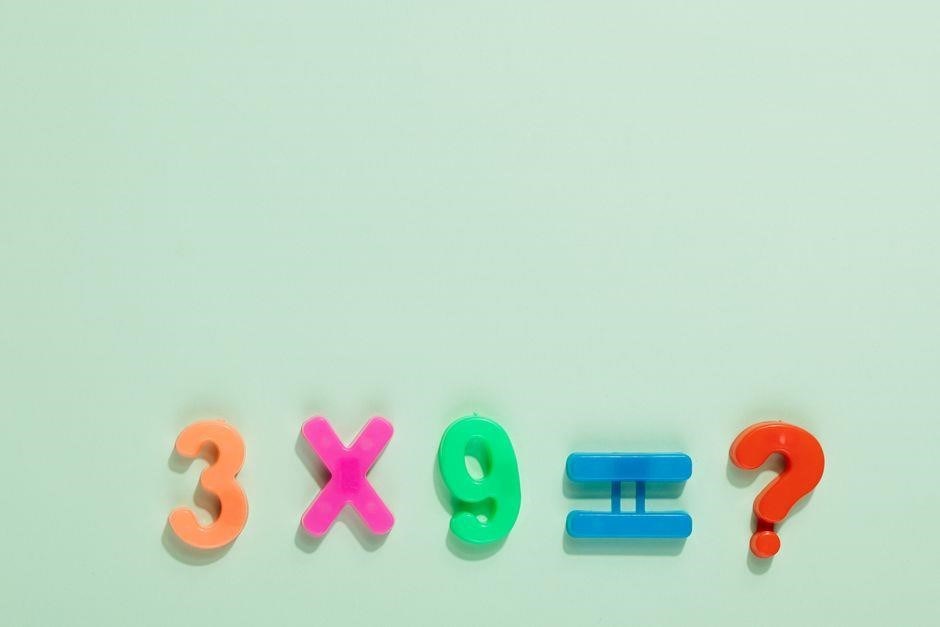
Inclusion of Multiplication, Division, Addition, Subtraction, Exponents, and Parentheses
Use step‑by‑step guidance, letting students solve each operation in order. Begin with simple expressions, then add exponents and parentheses. Provide instant feedback via answer keys, and encourage peer discussion. Rotate worksheets weekly to maintain engagement. Students review solutions reinforcing order!
Stepwise Problem Solving and Practice Routines
Stepwise problem solving begins by identifying each operation type. Students first locate any exponents, then evaluate parentheses, followed by multiplication/division from left to right, and finally addition/subtraction. A typical routine starts with a warm‑up set of 3–5 quick checks, then moves to a full worksheet that mixes all symbols. Teachers can use a timer to encourage focus, marking each completed line with a check mark. After solving, students review the answer key, noting any missteps, and discuss why the chosen order mattered. Repetition is key: alternate worksheets that emphasize exponents with those that focus on parentheses, and cycle difficulty levels weekly. Peer‑review groups can spot common mistakes, while a brief recap of rules before each session reinforces retention. By embedding this routine into daily math practice, learners internalize the hierarchy of operations and gain confidence in handling complex expressions.
Teachers can incorporate technology by using interactive whiteboards where students solve expressions live, allowing instant feedback. A rotating set of challenge cards encourages quick mental calculations, while a shared spreadsheet tracks progress over weeks. Incorporating real‑world scenarios—such as calculating discounts or growth rates—helps students see the relevance of exponents and parentheses. Setting short, timed bursts of 3–5 minutes keeps focus sharp, and a post‑activity reflection sheet prompts learners to articulate the reasoning behind each step.

Common Pitfalls and How to Address Them
Students often misapply exponent rules, treating them like multiplication. They also ignore parentheses, leading to wrong results. Address this by highlighting the hierarchy, using color‑coded steps, and giving frequent practice with mixed‑operation worksheets Add quick quizzes after each set daily now
Misapplication of Exponent Rules
Students frequently treat exponents as ordinary multiplication, leading to errors such as 2^3 × 2^2 = 2^5 instead of 2^5. They also ignore the rule that exponents apply only to the immediate base unless parentheses dictate otherwise. Worksheets that explicitly separate exponent steps, use color coding, and provide instant feedback help correct these misconceptions. By incorporating short, focused drills that isolate exponent operations before combining them with other operations, learners can internalize the correct hierarchy. Additionally, reinforcing the concept that exponents are performed before any multiplication or division, and that parentheses can override the default order, ensures consistent application across varied problem sets. Teachers can use the downloadable PDF format to insert custom examples that reflect real‑world scenarios, making the abstract rules more tangible. When students encounter ambiguous expressions, the worksheets prompt them to explicitly write parentheses around the exponent terms, reinforcing the visual cue that exponents bind tighter than multiplication or division. This practice reduces the cognitive load and builds confidence in handling complex expressions. Finally, the worksheets prompt them to explicitly write parentheses around the exponent terms, reinforcing the visual cue that exponents bind tighter than multiplication or division. This practice reduces the cognitive load and builds confidence in handling complex expressions. These resources empower teachers ensure mastery the hierarchy!!! now!!!

Benefits for Students Across Grades 2-9

These worksheets support differentiated instruction, letting teachers assign tasks that match readiness levels and promote mastery through practice.!!

Additional Resources and Further Reading
Teachers can explore a wealth of scholarly resources to deepen their understanding of order‑of‑operations instruction. The National Council of Teachers of Mathematics (NCTM) offers a framework that emphasizes procedural fluency and conceptual insight when working with exponents and parentheses. Khan Academy supplies free, self‑paced lessons and instant feedback that guide learners through PEMDAS step by step. The American Mathematical Society’s Mathematics Teacher journal publishes peer‑reviewed research on worksheet‑based interventions, providing evidence‑based strategies for scaffolding complex expressions. For educators who prefer downloadable content, the Teaching Resources section of the International Society for Technology in Education (ISTE) hosts a collection of PDF worksheets that can be customized via a simple spreadsheet template. Additionally, the Math Open Reference (MOR) offers a searchable database of problem sets across difficulty levels, allowing teachers to match tasks to individual student needs. GeoGebra’s dynamic visualization tools let students manipulate algebraic expressions in real time, reinforcing the hierarchical nature of operations. These resources collectively support a robust, evidence‑based approach to mastering order‑of‑operations with exponents, ensuring that learners across grades 2‑9 develop confidence and competence. Students benefit from repeated practice that reinforces the sequence of operations, and teachers can track progress using built‑in answer keys. Interactive quizzes help identify common misconceptions, such as misapplying exponent rules or ignoring parentheses. By integrating these resources into daily lessons, classrooms foster a culture of mathematical rigor and curiosity. These tools also support differentiated instruction, allowing educators to tailor difficulty and pacing to meet diverse learner needs. Students gain confidence and mastery daily.