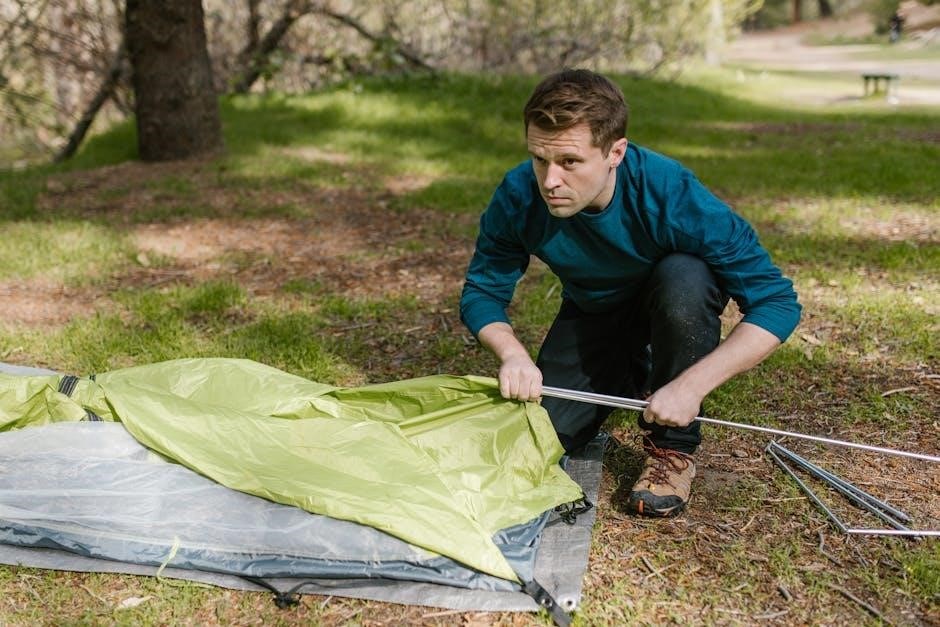
Assembling a 10×30 canopy or party tent is key for successful events, demanding a stable, safe, and visually appealing structure. Careful instructions are vital!
Importance of Following Instructions
Following the 10×30 canopy assembly instructions meticulously is absolutely crucial for a safe and successful setup. These tents are temporary structures, and proper construction directly impacts their stability, especially considering unpredictable weather conditions. Deviating from the guide can lead to frame instability, potential collapse, and even injury.
A pre-assembly inspection, guided by the instructions, ensures all parts are present and undamaged, preventing frustrating delays. Understanding each step minimizes errors and maximizes the tent’s ability to withstand wind and other environmental factors. Ignoring the guide risks compromising the shelter’s protective capabilities and overall event experience.
Safety Precautions During Assembly
Prioritize safety during 10×30 canopy assembly! These structures, while providing shelter, require careful handling; Always assemble on a level surface, clearing any obstructions or hazards. Be mindful of overhead power lines.
When connecting frame components, avoid excessive force. Securely fasten all parts, ensuring a stable structure. If wind is present, consider additional stabilization with guy lines and stakes. Remember these are temporary structures and don’t meet structural code unless specified, so use good judgment. Never assemble alone; having assistance is highly recommended for lifting and maneuvering parts.
Parts List and Inventory
A thorough inventory is crucial before assembly; confirm all frame components, the canopy top, sidewalls, fasteners, and accessories are present and undamaged.
Identifying Frame Components
Successfully assembling your 10×30 canopy begins with correctly identifying each frame piece. You’ll find hip rafters, crucial for the roof’s peak, and top spreaders that provide essential structural support. Look for side tees and spreaders, forming the base perimeter. Corner fittings are vital connectors, joining the side sections. The 3-way crown fitting is central, where hip rafters initially attach.
Carefully lay out all parts on a clear surface, referencing your parts list. Familiarize yourself with each component’s shape and function before starting. Distinguishing these elements upfront streamlines the assembly process, preventing confusion and ensuring a robust, secure structure. Proper identification minimizes errors and maximizes efficiency.
Canopy Top and Sidewall Identification
Before installation, differentiate the canopy top from the sidewalls. The canopy top is the large, waterproof covering, often made of polyethylene. Sidewalls are individual panels designed to enclose the canopy’s sides, offering protection from the elements. Examine the sidewalls for attachment points – typically Velcro, clips, or ties.
Ensure you have the correct number of sidewalls for full enclosure. Inspect the canopy top for grommets or reinforced edges, where it will connect to the frame. Correctly identifying these components prevents mismatched fittings and ensures a secure, weatherproof shelter. A pre-assembly check saves time and frustration.
Fasteners and Accessories Checklist
A thorough fastener and accessory check is crucial before assembly. Verify you have all necessary components: screws, bolts, clips, stakes, and guy lines. Count each item against the parts list to avoid mid-assembly delays caused by missing pieces. Inspect each fastener for damage – stripped threads or bent heads render them unusable.
Confirm the presence of corner fittings, top spreaders, and any specialized connectors. Don’t forget sidewall attachment hardware like Velcro strips or tie-down ropes. Having a complete inventory streamlines the process and ensures a structurally sound 10×30 canopy.

Preparing the Assembly Area
Select a level ground space, free from obstructions and potential hazards, to ensure safe and efficient assembly of your 10×30 canopy or party tent.
Choosing a Level Surface
Prior to initiating the assembly of your 10×30 canopy, meticulously select a level surface. An uneven ground can compromise the structural integrity and stability of the tent, potentially leading to collapse or damage. Thoroughly inspect the chosen area, utilizing a level if necessary, to identify and address any significant slopes or depressions.
Minor imperfections can often be compensated for during frame assembly, but substantial unevenness requires remediation. Consider using shims or ground anchors to create a more stable base. Remember, a level foundation is paramount for a secure and enjoyable event experience, ensuring the safety of your guests and the longevity of your canopy.
Clearing Obstructions and Hazards
Before commencing assembly of your 10×30 canopy, thoroughly clear the designated area of all potential obstructions and hazards. This includes rocks, roots, branches, and any other debris that could damage the canopy fabric or pose a tripping risk. Inspect for overhead hazards like power lines or low-hanging branches, ensuring ample clearance.
Also, be mindful of underground utilities; avoid areas where digging might be necessary. A safe and clear workspace is crucial for efficient assembly and prevents potential accidents. Prioritizing hazard removal contributes to a secure environment for both the setup crew and eventual event attendees, maximizing enjoyment.

Frame Assembly: Base Construction
Begin assembly by connecting hip rafters to the crown, then add top spreaders and rafters, followed by corner fittings, side tees, and spreaders.
Assembling Corner Fittings
Corner fittings are crucial for establishing the foundational stability of your 10×30 canopy frame. Begin by carefully laying out the frame parts on a level surface, approximating their final positions. These fittings typically connect the side tees and spreaders, forming the corners of the rectangular base.
Ensure the fittings are oriented correctly, as improper alignment can compromise the entire structure. Securely attach the side tees to the corner fittings using the provided fasteners – often push-button locks or screws. Double-check that each connection is firm and locked into place before proceeding. A solid corner assembly is paramount for preventing wobbling or collapse during use.
Connecting Side Tees and Spreaders
After assembling the corner fittings, the next step involves connecting the side tees and spreaders to create the perimeter of your 10×30 canopy base. Slide the side tees into the openings of the corner fittings, ensuring a snug fit. Then, attach the spreaders – horizontal bars that provide lateral stability – between the side tees.
Utilize the provided connectors, such as push-button mechanisms or screws, to firmly secure the spreaders to the side tees. Regularly inspect these connections during assembly to guarantee they are properly locked. A well-connected base frame is essential for supporting the weight of the canopy top and withstanding wind.
Frame Assembly: Roof Structure
Constructing the roof involves attaching hip rafters to the crown, followed by installing top spreaders and rafters for a durable, protective overhead framework.
Attaching Hip Rafters to the Crown
Begin the roof structure by carefully attaching the hip rafters to the 3-way crown fitting. This is a foundational step, ensuring the stability and correct geometry of the entire canopy roof. Ensure each hip rafter securely locks into the crown, typically utilizing a button or pin mechanism for a firm connection.
Pay close attention to the orientation of the rafters; they should radiate outwards from the crown, forming the angled supports for the canopy top. Proper alignment at this stage is crucial for preventing issues during subsequent assembly. Double-check each connection before proceeding, guaranteeing a robust and reliable framework capable of supporting the canopy material and withstanding external forces.
Installing Top Spreaders and Rafters
Following the hip rafter attachment, install the top spreaders and rafters to further reinforce the roof structure. These components connect the hip rafters, creating a rigid framework that distributes weight evenly across the canopy. Securely attach the top spreaders to the designated points on the hip rafters, utilizing the provided fasteners.
Then, position the rafters between the spreaders and hip rafters, ensuring a snug fit. Proper installation of these elements is vital for maintaining the canopy’s shape and preventing sagging. Regularly inspect connections for tightness throughout the process, guaranteeing a stable and durable overhead structure.

Canopy Top Installation
Begin by carefully laying out the canopy top, then securely attach it to the assembled frame, ensuring proper alignment for optimal coverage and protection.
Laying Out the Canopy Top
Before securing the canopy top, completely unfold it on a clean, spacious surface, ideally near the assembled frame. This allows for easy maneuvering and prevents potential damage during installation. Inspect the canopy for any tears or defects before proceeding.
Ensure the side with the designated attachment points (often reinforced edges or grommets) faces upwards, ready to connect with the frame. Carefully position the canopy so it aligns with the frame’s dimensions, leaving an equal overhang on all sides. This initial layout is crucial for a taut and properly fitted final result, maximizing weather protection and structural integrity.
Securing the Canopy to the Frame
With the canopy top laid out, begin attaching it to the frame, starting at one corner and working your way around. Utilize the provided fasteners – typically clips, Velcro straps, or ropes – to connect the canopy’s attachment points to the frame’s corresponding locations.
Ensure each fastener is securely tightened, but avoid over-tightening, which could damage the canopy fabric. Maintain even tension as you progress, preventing wrinkles or sagging. Double-check all connections for stability before moving on, guaranteeing a snug and weatherproof fit. This step is vital for the canopy’s overall strength.

Sidewall Attachment
Attaching sidewalls enhances your 10×30 canopy’s protection, creating a fully enclosed space for events, secured with provided fasteners.
Attaching Sidewalls to the Frame
Begin attaching the sidewalls to the 10×30 canopy frame by aligning the designated attachment points – typically loops, grommets, or Velcro straps – on the sidewall panels with the corresponding points on the frame’s legs and top rails. Ensure the sidewall is oriented correctly, with any doors or windows positioned as desired. Carefully drape the sidewall over the frame, starting at one corner and working your way around.
It’s often easiest to start with the corners, securing them first to establish the sidewall’s position. Gently pull the sidewall taut as you attach it, avoiding excessive stretching or strain. Overlapping sidewalls at the corners is common, creating a more secure and weather-resistant enclosure. Proper alignment is crucial for a neat and professional appearance, and to ensure the fasteners can be applied effectively.
Securing Sidewalls with Fasteners
Once the sidewalls are draped and aligned, secure them firmly to the 10×30 canopy frame using the provided fasteners. These commonly include clips, hooks, bungee cords, or Velcro straps. Begin by attaching fasteners at regular intervals along the top and sides of each sidewall, ensuring even tension. Pay close attention to corners and areas around doors or windows, reinforcing these points for added stability.
Double-check that all fasteners are securely engaged, preventing the sidewalls from flapping or detaching in windy conditions. Avoid over-tightening, which could damage the fabric or frame. A snug fit is ideal, creating a weatherproof barrier. Regularly inspect fasteners throughout the event to maintain security.
Tensioning and Stabilization
Proper tensioning is crucial for a secure 10×30 canopy, utilizing adjustments and guy lines with stakes to withstand unpredictable weather conditions effectively.
Adjusting Canopy Tension
Achieving optimal canopy tension is paramount for stability, especially when facing variable weather. Begin by examining the canopy top, ensuring it’s evenly distributed over the frame. Most 10×30 canopies feature tensioning straps or buckles at each corner and along the sides; these allow for incremental adjustments.
Tighten these straps gradually and uniformly, avoiding excessive force that could strain the fabric or frame. A properly tensioned canopy will exhibit a smooth, taut surface without significant wrinkles or sagging. Regularly check and readjust tension, particularly after initial setup and following any significant weather changes, to maintain structural integrity and prevent damage.
Using Guy Lines and Stakes
For enhanced stability, particularly in windy conditions, utilize guy lines and stakes with your 10×30 canopy. Attach the guy lines to designated points on the canopy frame – typically corners and side sections. Extend these lines outwards at a 45-degree angle, ensuring they don’t create tripping hazards.
Securely anchor the guy lines to the ground using robust stakes, driven fully into the earth. For hard surfaces, consider using weighted anchors. Regularly inspect the guy lines for slack and readjust as needed. Proper use of guy lines significantly increases the canopy’s resistance to wind and prevents potential collapse.

Troubleshooting Common Assembly Issues
Missing parts or frame instability can occur during assembly. Promptly contact the seller for replacements and incorporate good judgment for safety.
Dealing with Missing Parts
Discovering missing components during 10×30 canopy assembly can be frustrating, but addressing it promptly is crucial for a successful setup. Immediately halt the assembly process and carefully re-examine the parts list against the contents of the packaging. Double-check all boxes and packing materials, as smaller items can easily be overlooked.
If a part is genuinely missing, do not attempt to substitute it with an incorrect or makeshift replacement, as this could compromise the structural integrity and safety of the canopy. Contact the seller or manufacturer directly, providing them with the part number and a clear description of the missing item. Most reputable suppliers will quickly ship a replacement part to minimize disruption. Keep your proof of purchase readily available to expedite the process.
Addressing Frame Instability
If your 10×30 canopy frame feels unstable during assembly, immediately stop and reassess the connections. Ensure all corner fittings, side tees, and spreaders are securely locked into place, verifying no pins or buttons are missing. A common issue is uneven ground; attempt to level the canopy by adjusting leg heights or adding shims under the feet.
Double-check that hip rafters and top spreaders are correctly aligned and firmly attached to the crown fitting. If instability persists, utilize guy lines and stakes to provide additional support, anchoring the frame securely to the ground. Remember, weather conditions can impact stability; always incorporate good judgment and common sense.

Maintenance and Care
Proper cleaning of the canopy top and careful storage are essential for longevity, protecting your investment and ensuring readiness for future events and gatherings.
Cleaning the Canopy Top
Maintaining a clean canopy top is crucial for extending its lifespan and preserving its appearance. Regularly inspect the canopy fabric for dirt, debris, and mildew. For light cleaning, a gentle wash with mild soap and water is recommended. Avoid harsh chemicals or abrasive cleaners, as these can damage the material.
Rinse thoroughly to remove all soap residue. Allow the canopy to air dry completely before storing. For stubborn stains or mildew, specialized canopy cleaners are available. Always follow the manufacturer’s instructions when using these products. Promptly address any spills or stains to prevent them from setting. A clean canopy not only looks better but also performs better, offering optimal protection from the elements.
Storing the Canopy Properly
Proper storage is essential for preserving your 10×30 canopy and ensuring its longevity. Before storing, ensure the canopy top is completely dry to prevent mildew growth. Disassemble the frame and carefully clean all components, removing any dirt or debris. Store the frame parts and canopy fabric in a cool, dry, and well-ventilated area.
Avoid storing in direct sunlight or extreme temperatures. Consider using a storage bag or container to protect the canopy from dust and pests. Regularly inspect the stored canopy for any signs of damage or deterioration. Following these guidelines will help maintain your canopy in optimal condition for years to come.